
15 : 45
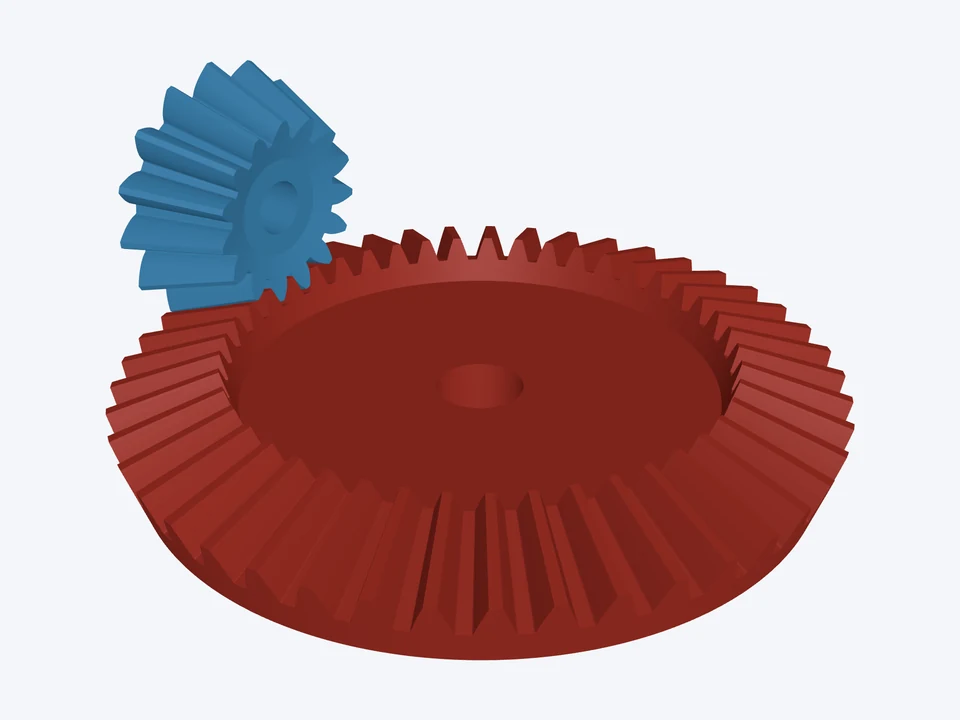

Straight bevel · AGMA 2005
m 2.2 · 20° · straight, AGMA 2005 proportions
The 15 : 45 pair (module 2.2, 3 : 1) with AGMA 2005's mid-face proportions.
Set the teeth, the module or pitch and the shaft angle, and get a pinion and gear that mesh: a miter pair, a right-angle reduction, or straight teeth at any angle from 10° to 170°. Spiral and hypoid pairs too. Add bores and hubs, check the strength, and download STL, STEP or a dimensioned drawing.
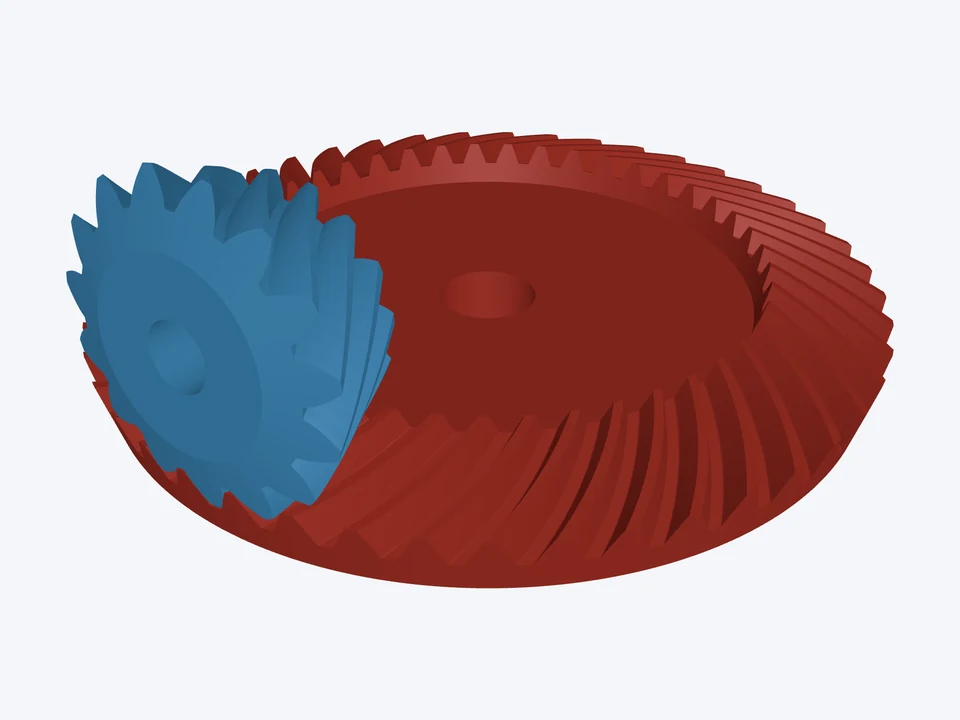
Straight teeth; spiral bevels with a 5° to 50° spiral angle, either hand; hypoids with the pinion offset from the gear's axis.
Straight pairs at any shaft angle from 10° to 170° while both pitch angles stay under 90°; miter gears at 1 : 1. Spiral and hypoid pairs at 90°.
Modules from 0.2 to 50 mm or the matching diametral pitches; 20° standard, plus 14½° and 25°.
Straight teeth with ANSI/AGMA 2005 proportions, or Gleason's, which match KHK and most stock bevel gears.
Straight teeth rolled out by a crown gear, with the true root and any undercut as cut; spiral and hypoid teeth from a face-mill cutter, the pinion crowned.
Contact and root stresses and safety factors to ISO 10300, for metals and printed filaments, with the walls that print the teeth solid. Rough estimates for now: compare designs with them.
Round, D-flat, keyway, ISO 14 and ISO 4156 spline and hex bores with retaining rings; a hub at the back or front with set screws or hub pins, on both parts.
Each part's dimensioned section and tooth with the gear data block, in mm or inch, as SVG, DXF and PNG.
STL with print compensation, each part standing on its back face. STEP of straight pairs now, both parts in mesh in one file; STEP of spiral and hypoid pairs follows.
| Setting | Choices | Source |
|---|---|---|
| Gear type | Straight; spiral bevel (5° – 50°, either hand); hypoid (offset pinion) | AGMA 2005; ISO 23509 |
| Shaft angle | Straight: 10° – 170°; spiral and hypoid: 90° | AGMA 2005 |
| Size | Modules 0.2 – 50 mm; the matching diametral pitches | |
| Tooth proportions | AGMA 2005 or Gleason (straight) | AGMA 2005-D03; SDP/SI, KHK |
| Pressure angle | 20°, 14½°, 25° | AGMA 2005 §5.7 |
| Teeth | Pinion 12 and up; up to 400 | AGMA 2005 §5.2 |
| Strength (rough estimates) | Contact and root stress, safety factors; metals and printed filaments | ISO 10300 (2001); ISO 6336-5 |
| Files | STL, SVG, DXF, PNG, a strength report; STEP of straight pairs |
Miter gears, right-angle reductions, printed drives, angled shafts, spiral and hypoid. Each opens with the pinion and gear in mesh, ready to change.
m 2.2 · 20° · straight, AGMA 2005 proportions
The 15 : 45 pair (module 2.2, 3 : 1) with AGMA 2005's mid-face proportions.
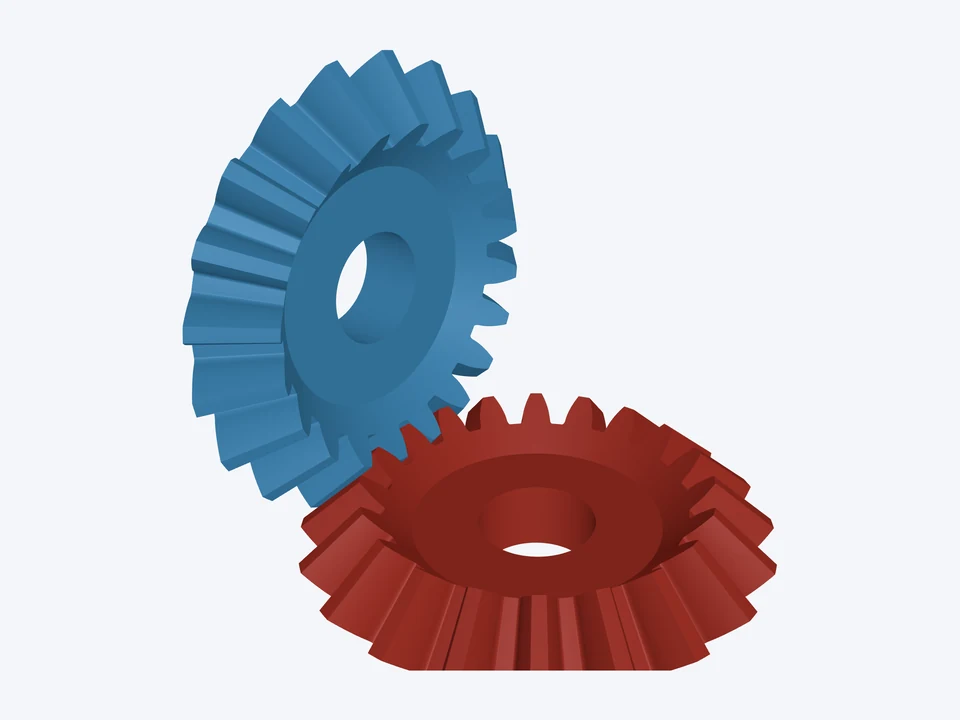

m 1.5 · 20° · straight, Gleason proportions
The most common stock miter size: 20 teeth, module 1.5, Gleason proportions that match catalogue gears.
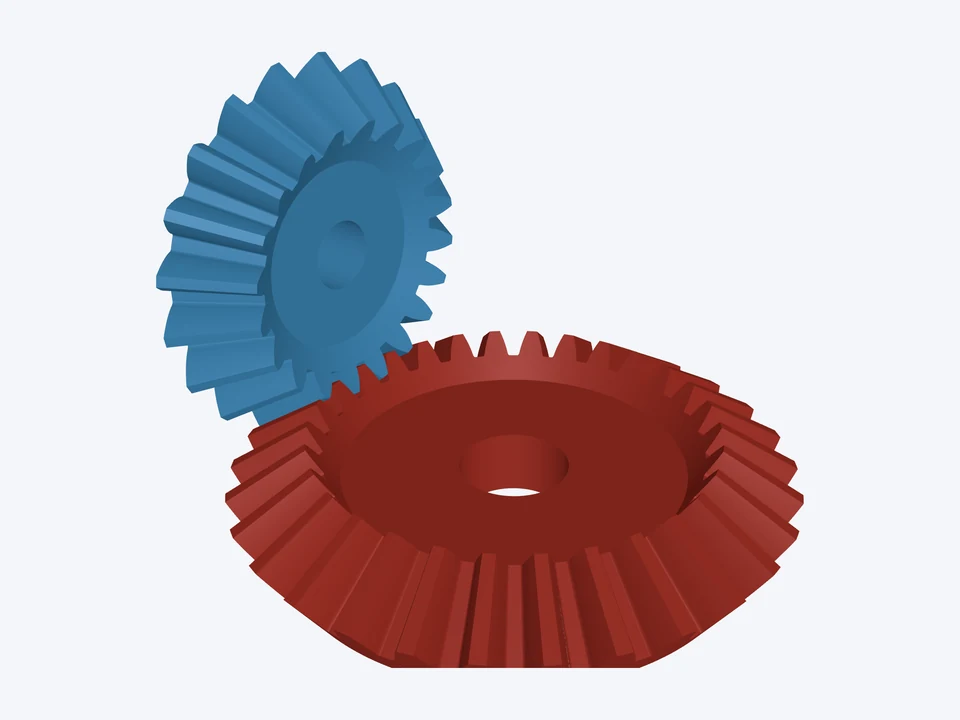

m 2 · 20° · straight, Gleason proportions
A gentle right-angle reduction, Gleason proportions.
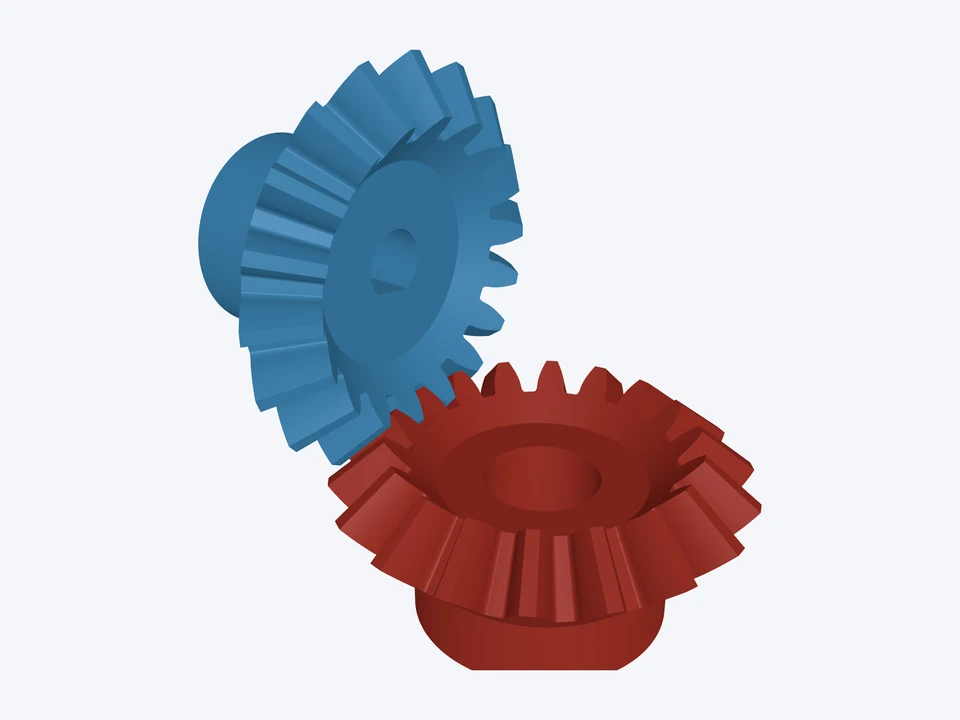

m 1.5 · 20° · straight, AGMA 2005 proportions
Turn a stepper's output 90°: 18-tooth miters, 5 mm D-flat in, 8 mm out, tapped set screws.
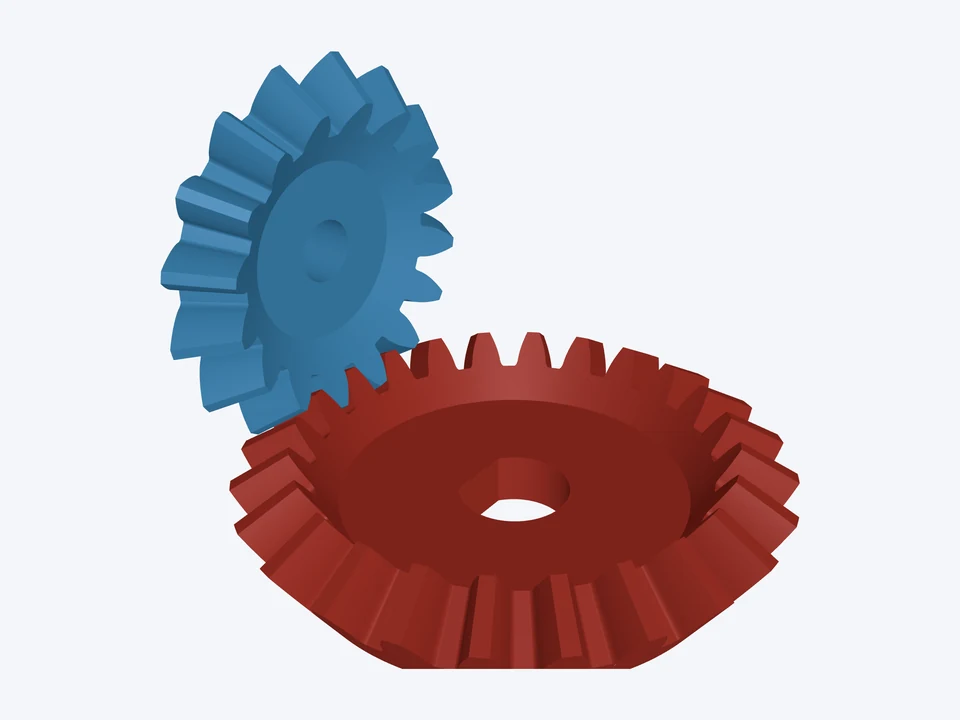

m 1 · 20° · straight, AGMA 2005 proportions
The pair inside an open differential: a 16-tooth spider gear on a 24-tooth side gear.
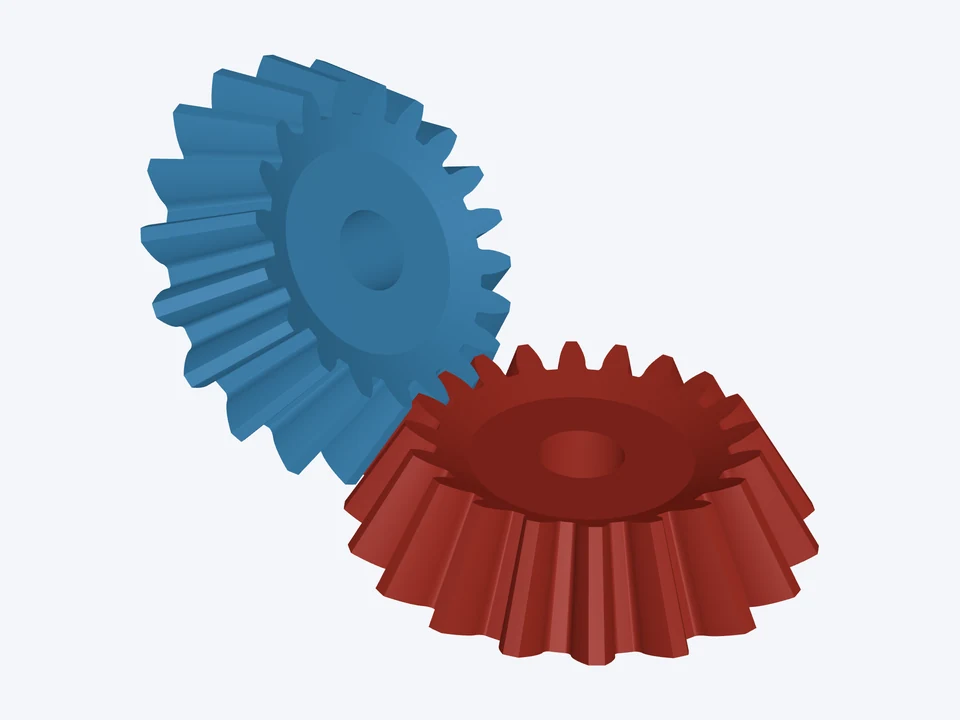

m 1.5 · 20° · straight, AGMA 2005 proportions
Two 20-tooth gears meeting at 60°, not 90°.
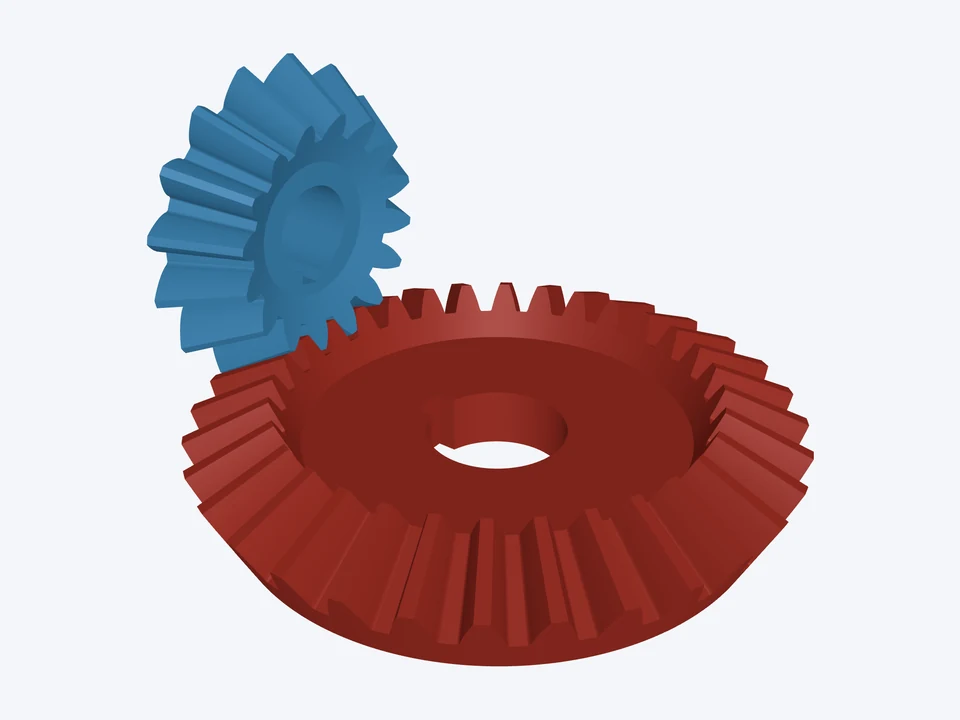

10 DP · 20° · straight, AGMA 2005 proportions
An inch pair: 10 DP, ½" keyed pinion, ¾" keyed gear.
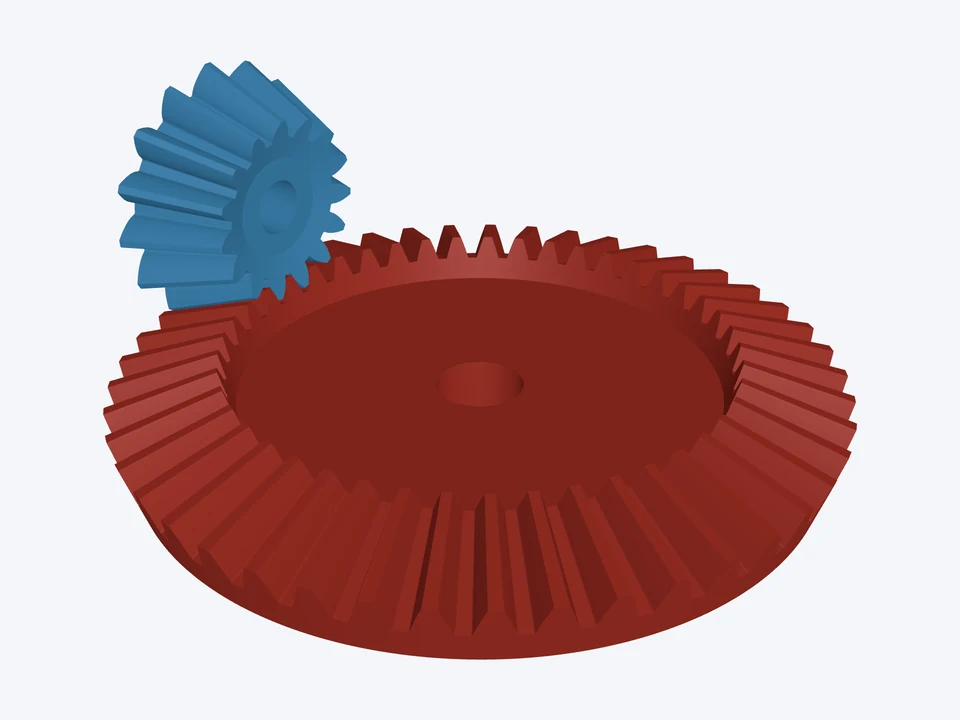

m 2.2 · 20° · straight, Gleason proportions
The same pair in Gleason's heel-based proportions, the ones catalogue gears use.
STL (with your print compensation, for 3D printing), SVG, DXF and PNG drawings of each part, and STEP at true size for straight pairs: one file with the pinion and gear in mesh. STEP of spiral and hypoid pairs follows; their STL and drawings are ready now.
Straight teeth are the simplest to print and the only ones with STEP today. Spiral teeth run smoother and quieter and carry more load for their size. A hypoid offsets the pinion from the gear's axis, as in a car's rear axle, so the shafts pass close by instead of meeting.
Yes, with straight teeth: any angle from 10° to 170°, as long as both pitch angles stay under 90°. The app says which angle works when one doesn't. Spiral and hypoid pairs are built at 90° so far.
Open the Strength check: set the load, the speed and each part's material, and it works out the contact and root stresses and the safety factors to ISO 10300, for metals and printed filaments, with a report you can download. They are rough estimates for now, not yet checked against a worked example: use them to compare designs, not to sign off a part that must not fail.
Yes. Each part prints standing on its back face, and the print compensation goes into the STL only. For a printed pair the Strength check gives the number of walls that print the teeth solid; print at least that many.
Yes. Designing and checking are free; downloads cost a few tokens, the same as the other tools, and one purchase covers every file of that design for 24 hours. See Pricing.