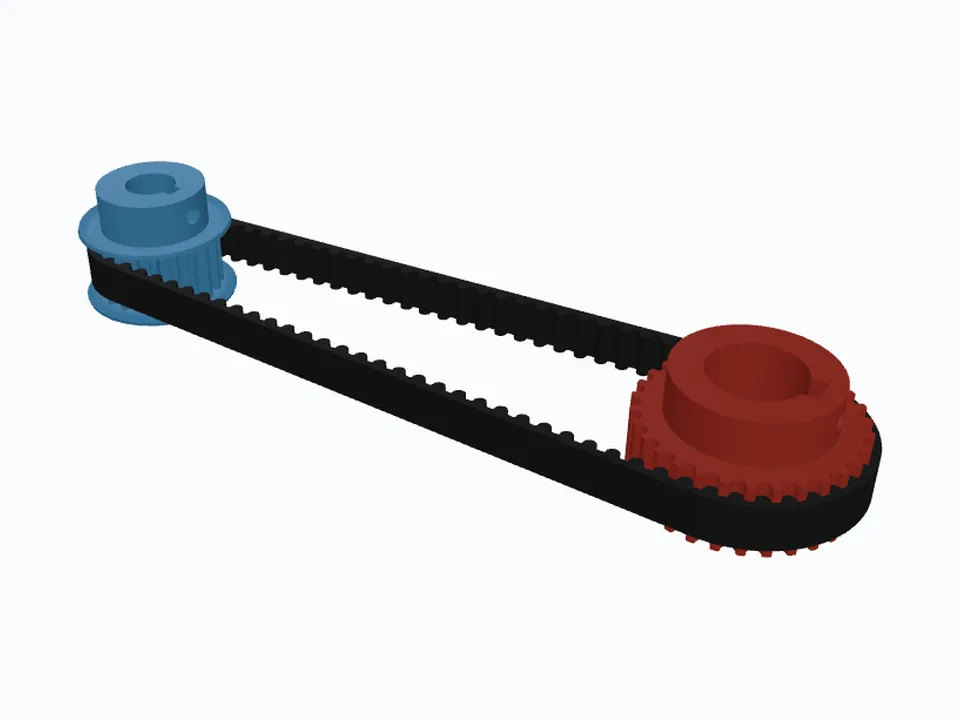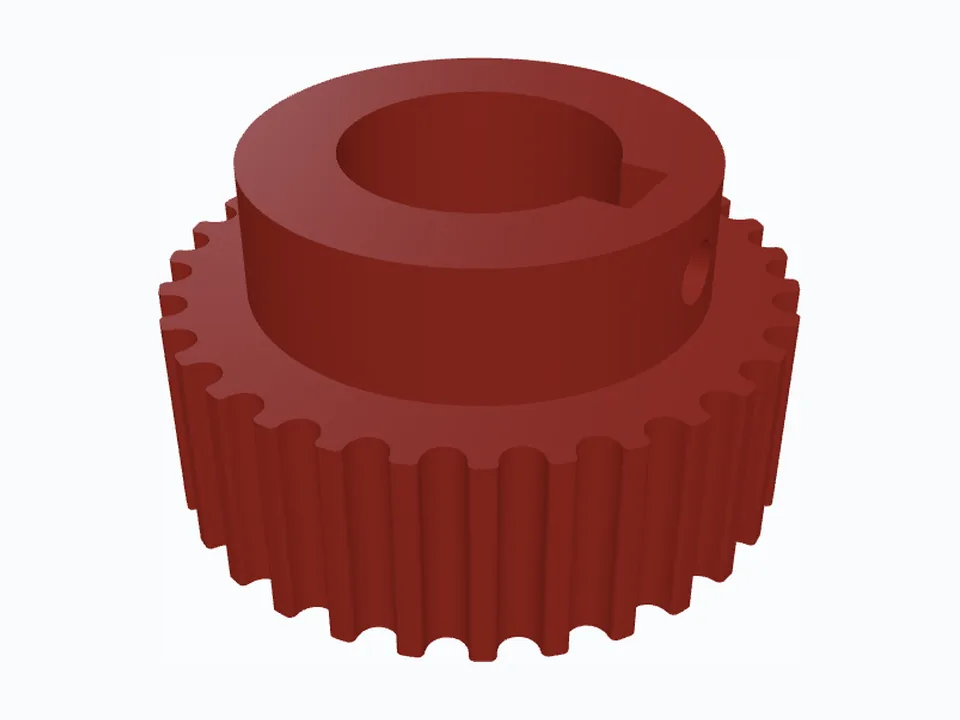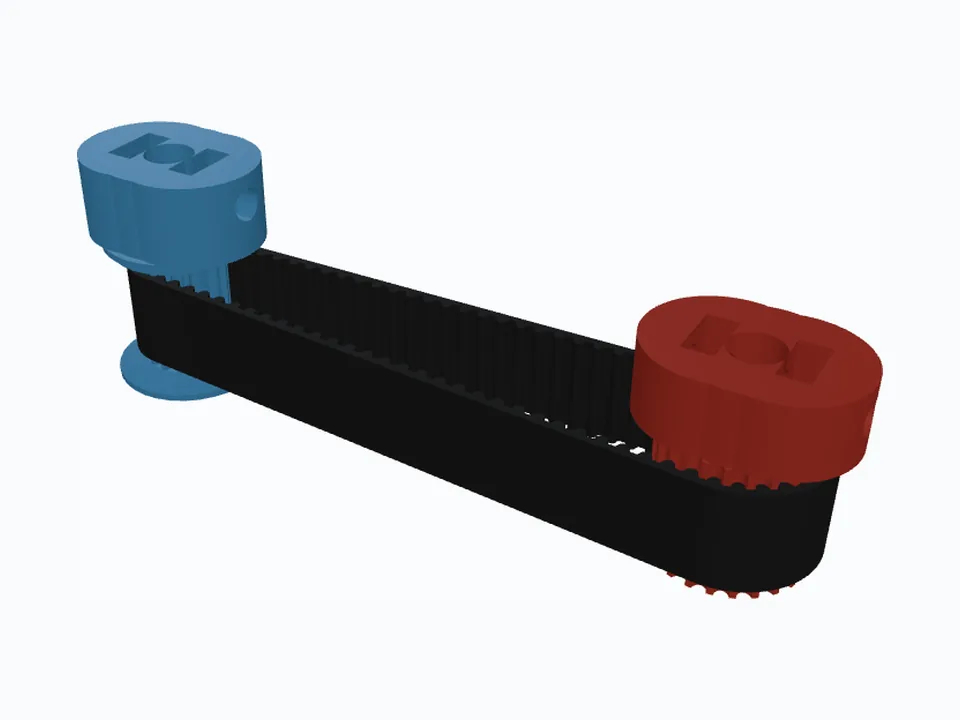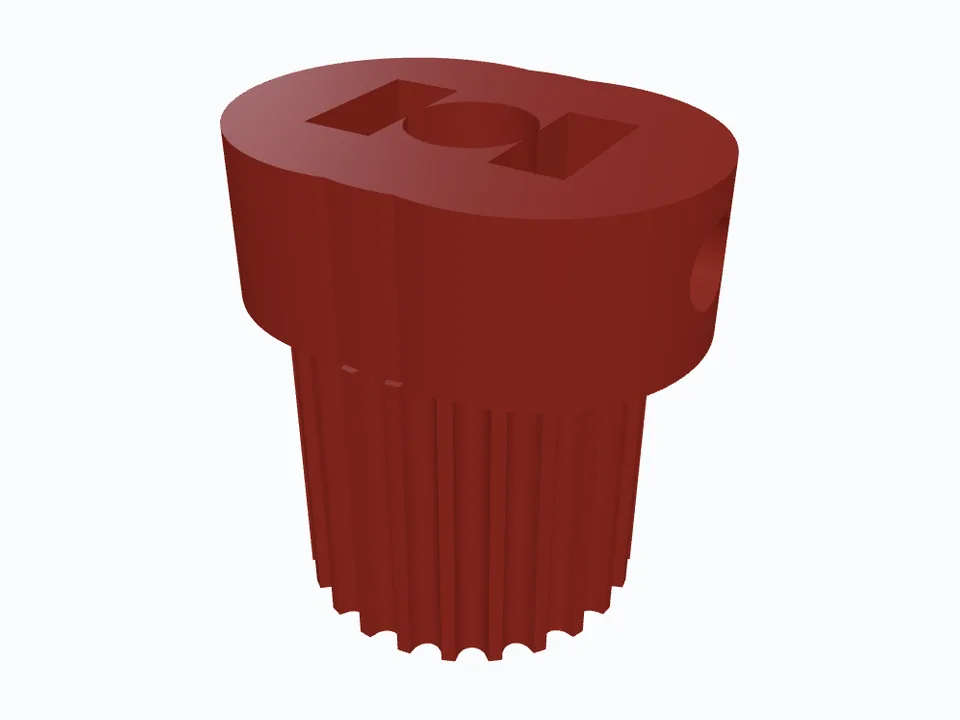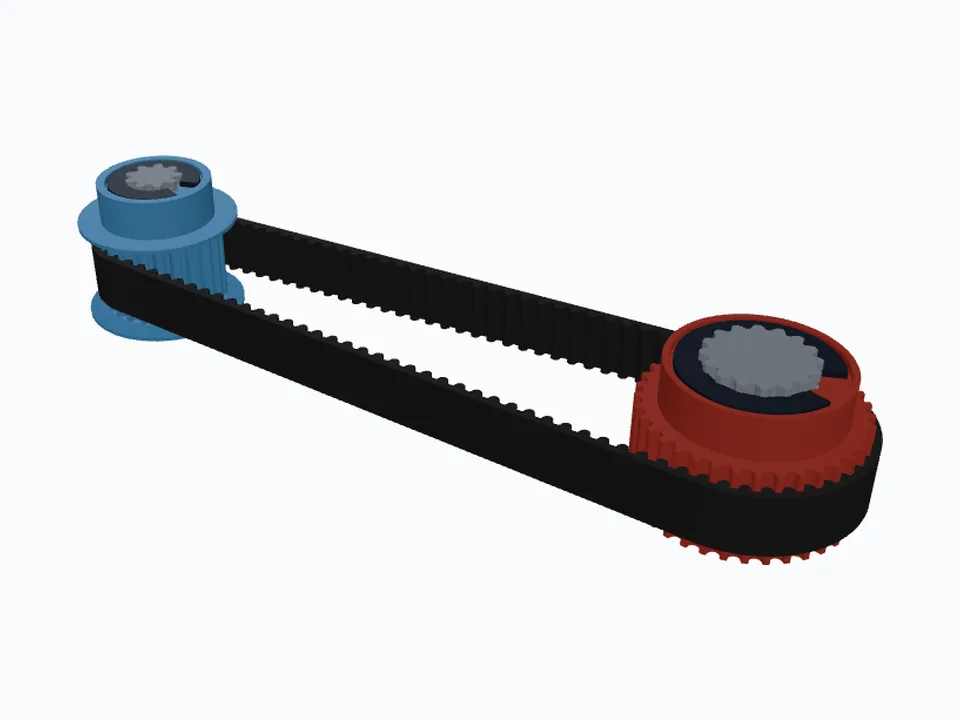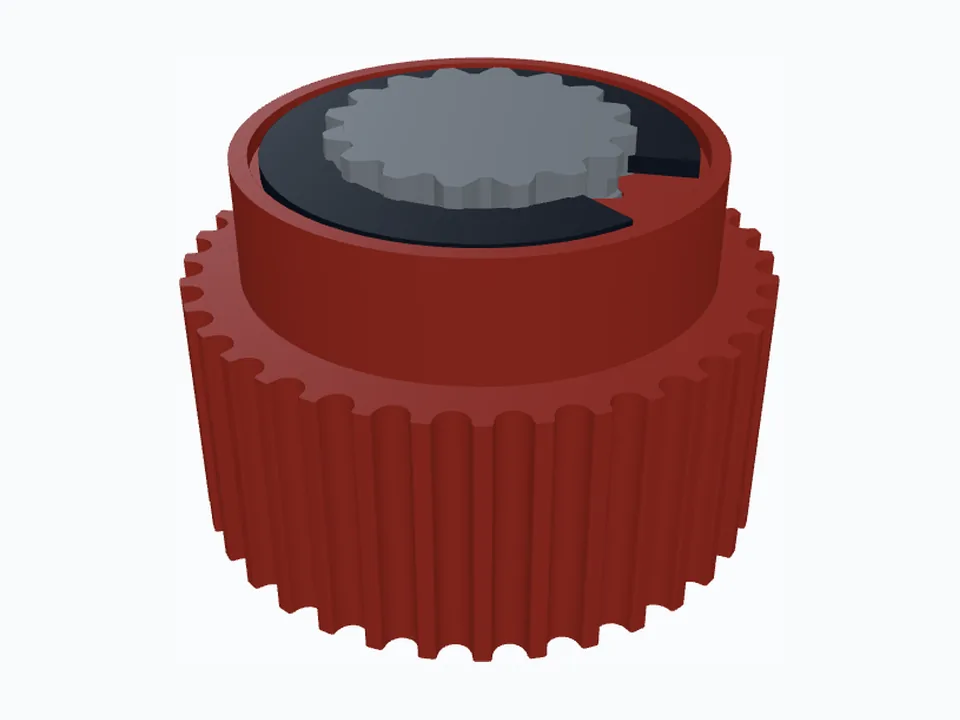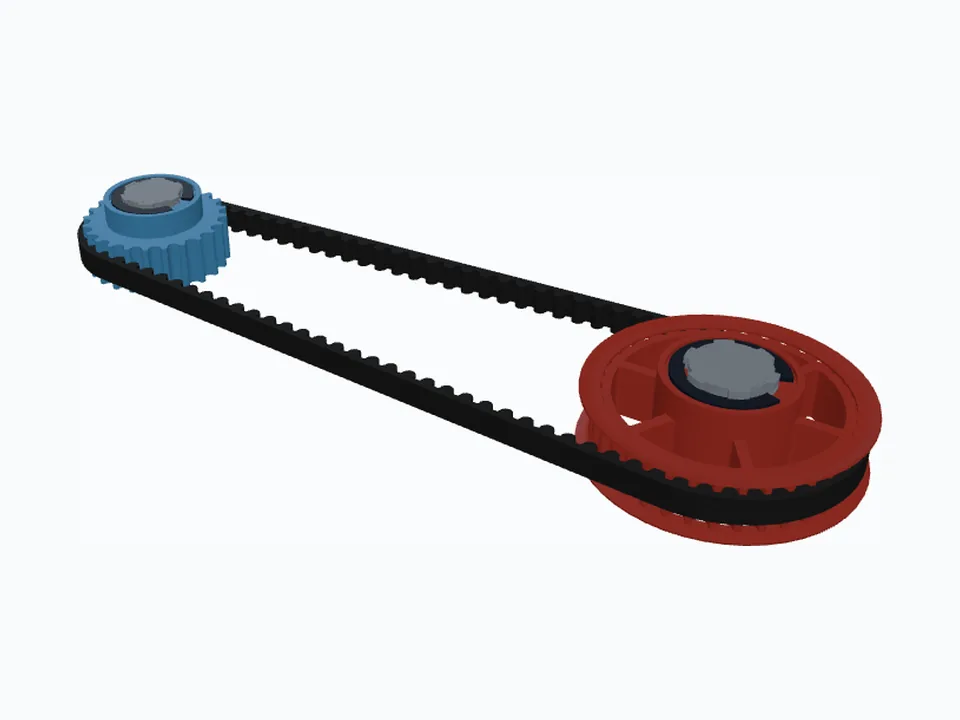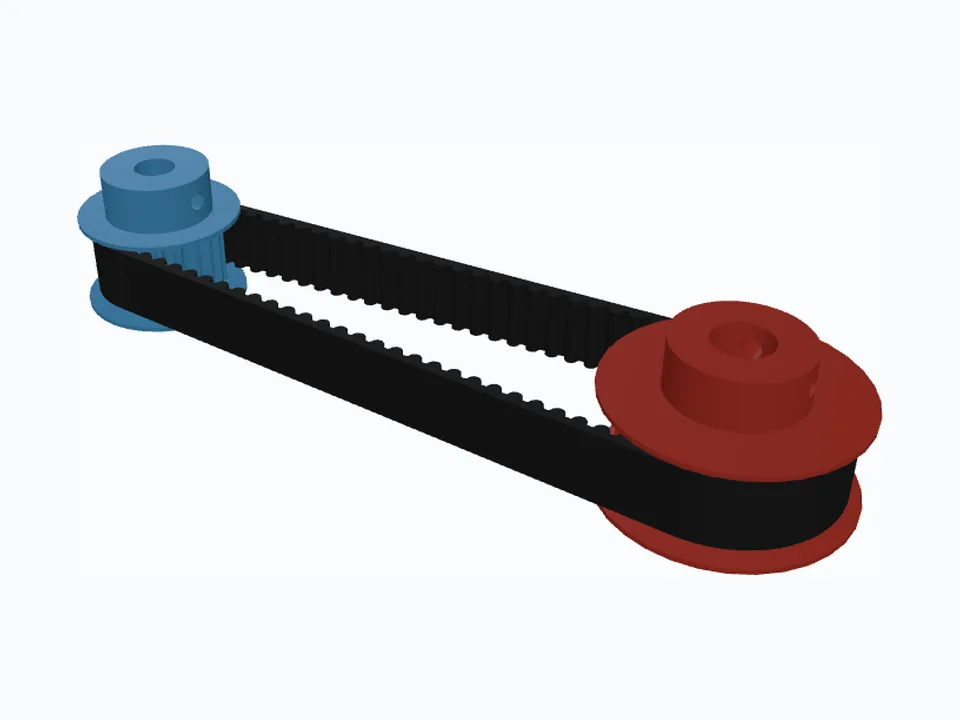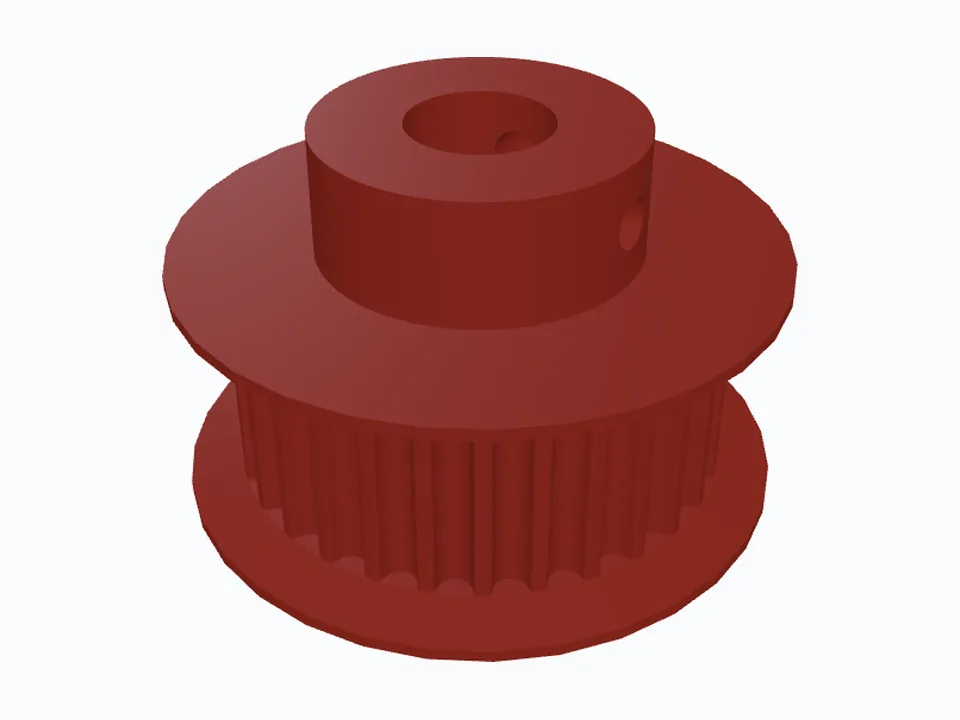
GT2 20T & 30T, 5 mm D-Flat Stepper Pulley
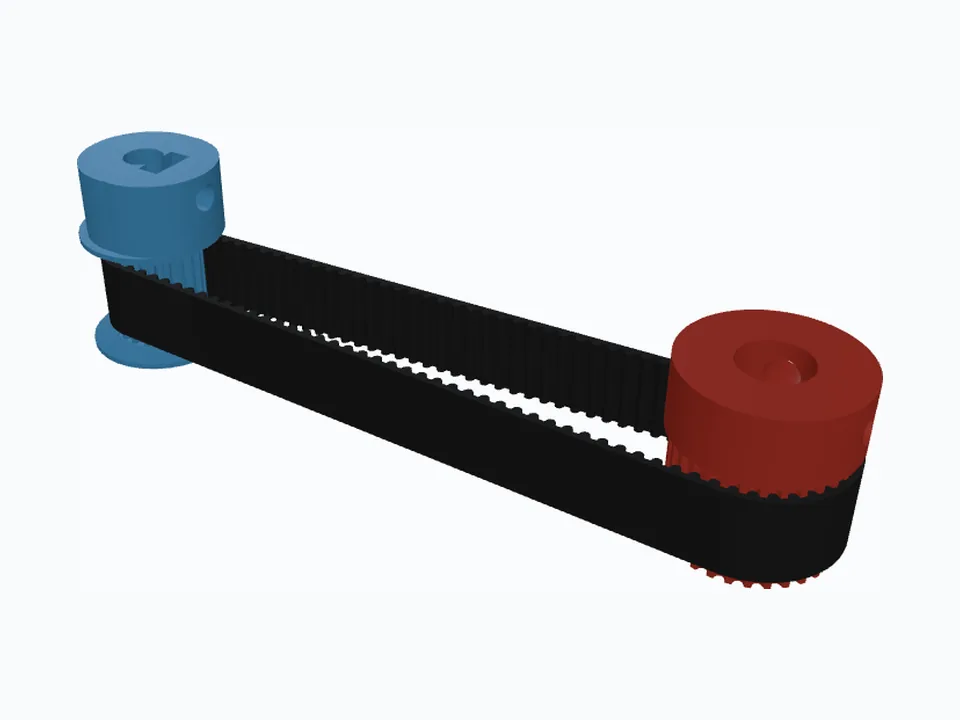
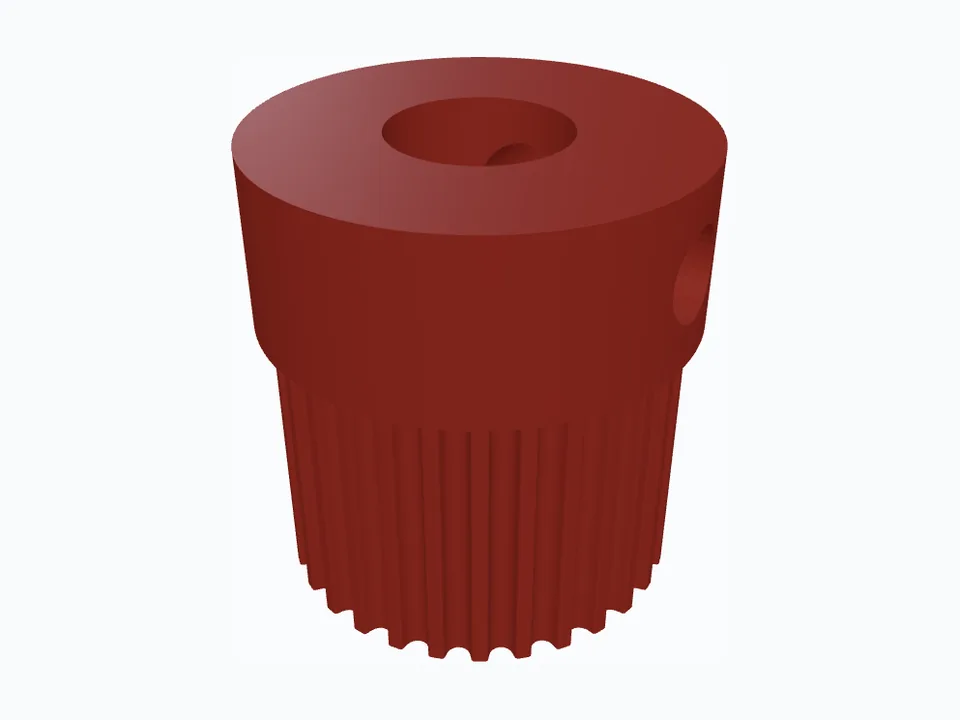
The 3D-printer classic done properly: a D-flat that keys onto the motor shaft, a set screw that bites into a captured nut instead of the plastic, and a 30-tooth partner held by two heat-set inserts.
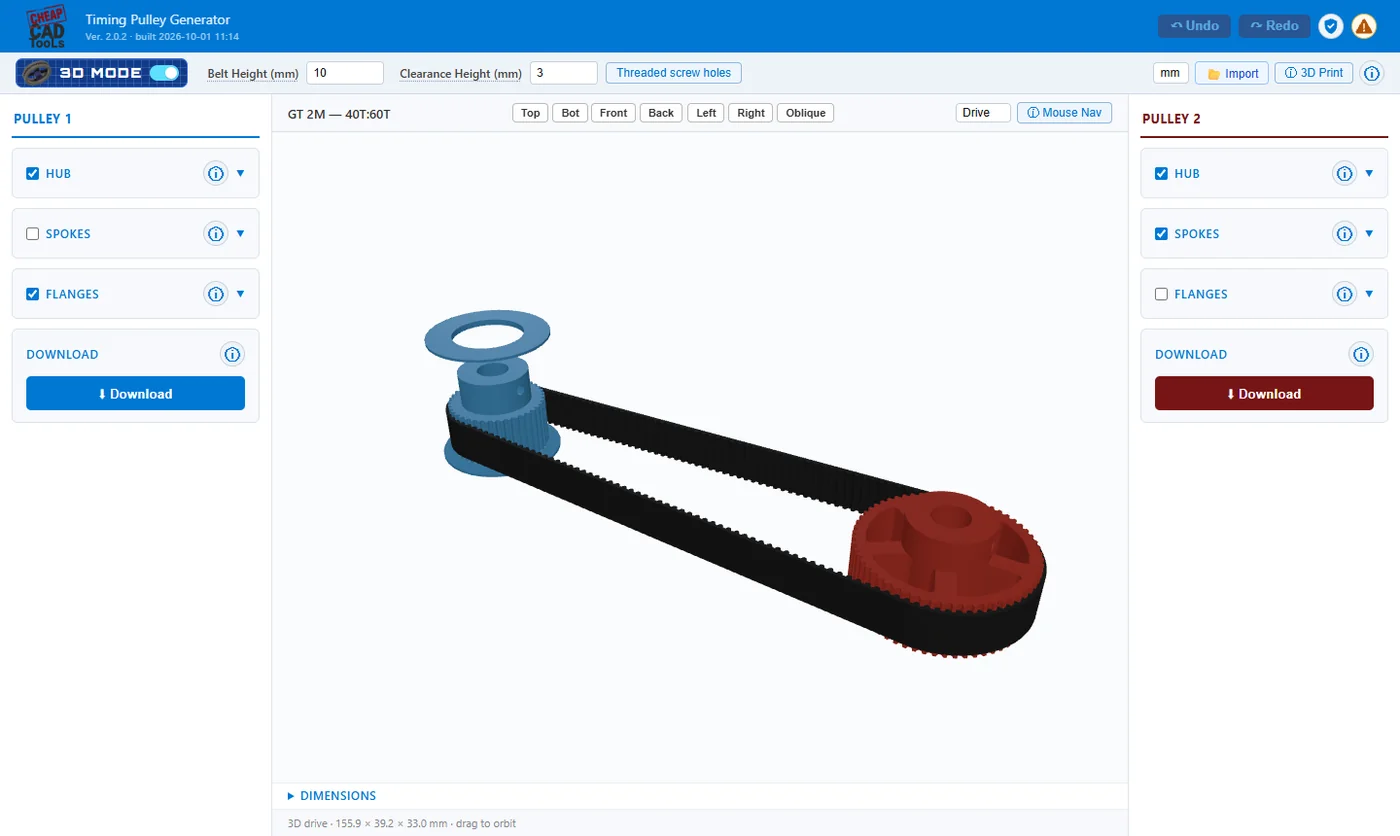
GT2, HTD, T5, AT5, XL, MXL and the rest — set the teeth and bore, add a hub, set screws, spokes or flanges, and download STL, STEP, DXF or SVG. Design a single pulley or a two-pulley drive with its belt.

HTD, GT (GT2/2GT, GT3, GT5), STD S-series, RPP, T and AT, and imperial MXL to XXH.
Centre distance, belt teeth, belt length and ratio, kept consistent as you change any one — with Lock Ratio.
Round, D-flat, ISO keyway, ISO 14 and ISO 4156 splines, and hex bar — including FRC ½″ and rounded hex — with DIN 471 or inch retaining rings.
Hub size and height, one or two set screws: tapped in the plastic, a captured nut, or a heat-set insert.
Spokes to save material on big pulleys; flanges printed with the pulley or cut from metal plate.
Tooth clearance and backlash presets, plus print compensation that goes into the STL only.
The Dimensions panel warns when a setting breaks a rule, names the source, and offers one-click Auto-fix.
STEP for CAD, STL for printing, DXF and SVG with true arcs — for each pulley and for the belt.
Every file carries its design. Import it, change one thing, download again. Undo, redo, mm or inches.
Every profile in each family, from the published standards and the belt makers' data.
| Family | Pitches |
|---|---|
| GT (2GT, 3GT, 5GT …) | 2M (GT2) · 3M (GT3) · 5M · 8M · 14M |
| HTD | 3M · 5M · 8M · 14M · 20M |
| STD / S-series | S2M · S3M · S5M · S8M · S14M |
| RPP | 3M · 5M · 8M · 14M · 20M |
| T (metric trapezoidal) | T2.5 · T5 · T10 · T20 |
| AT (metric trapezoidal) | AT3 · AT5 · AT10 · AT20 |
| Imperial | MXL · XL · L · H · XH · XXH |
Each opens in the generator with every setting in place. Change the teeth, bore or hub and download.
The 3D-printer classic done properly: a D-flat that keys onto the motor shaft, a set screw that bites into a captured nut instead of the plastic, and a 30-tooth partner held by two heat-set inserts.
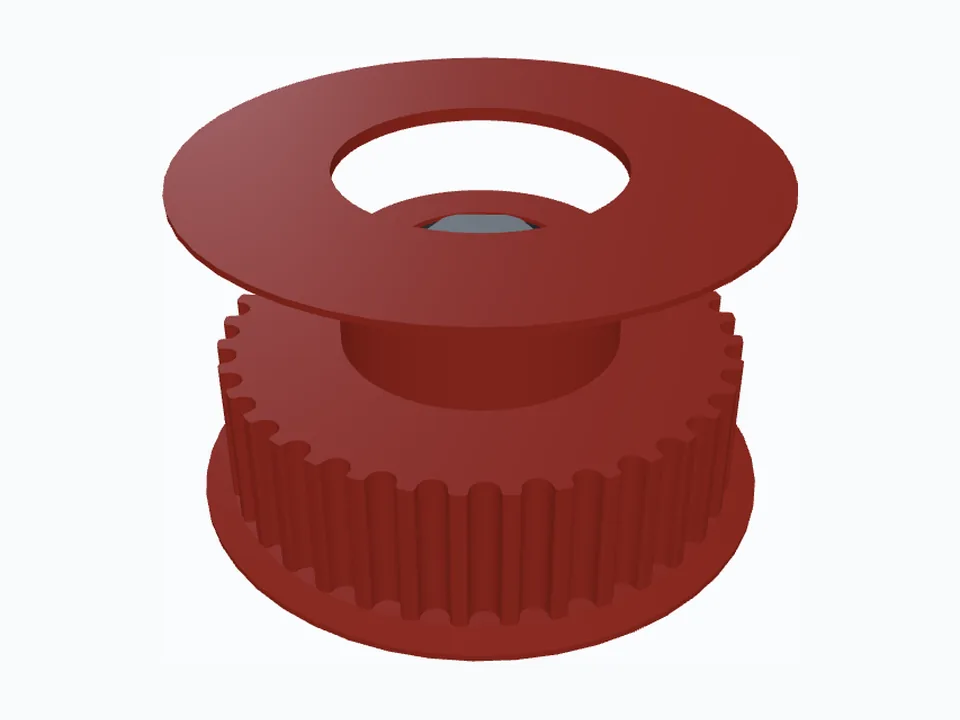
Ready for an FRC robot: the bore fits REV ½" rounded hex shaft, with SH-50 retaining-ring grooves on both faces and a splined washer under each ring so nothing walks along the shaft.
Built like a machined part: ISO 773 keyways sized to 12 mm and 20 mm shafts, M5 set screws to lock them, and flanges drawn as bent metal plates instead of printed rims.
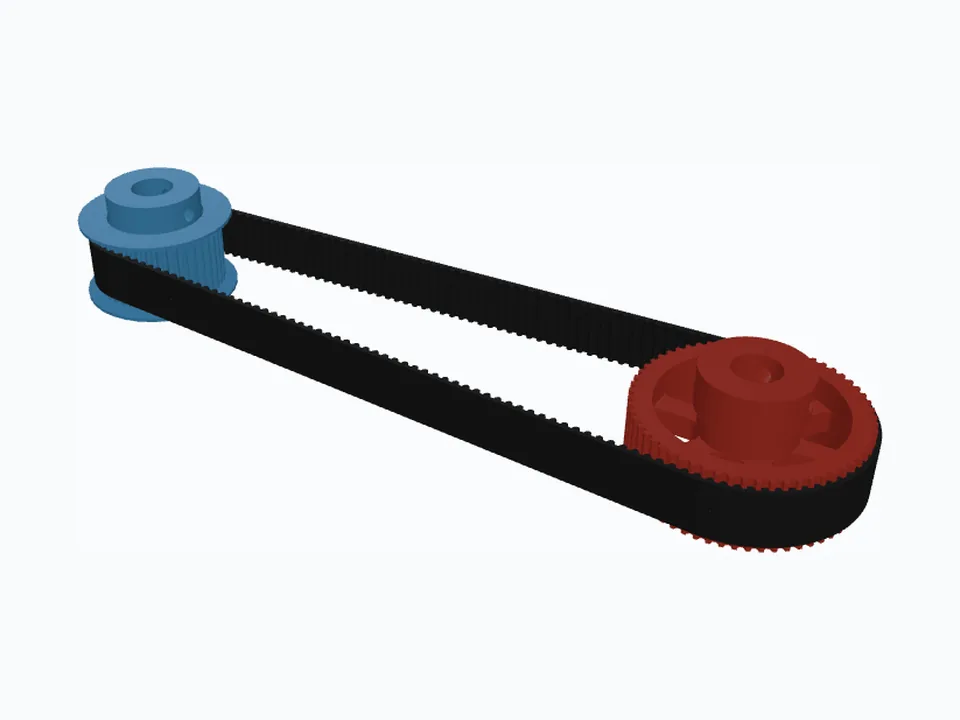
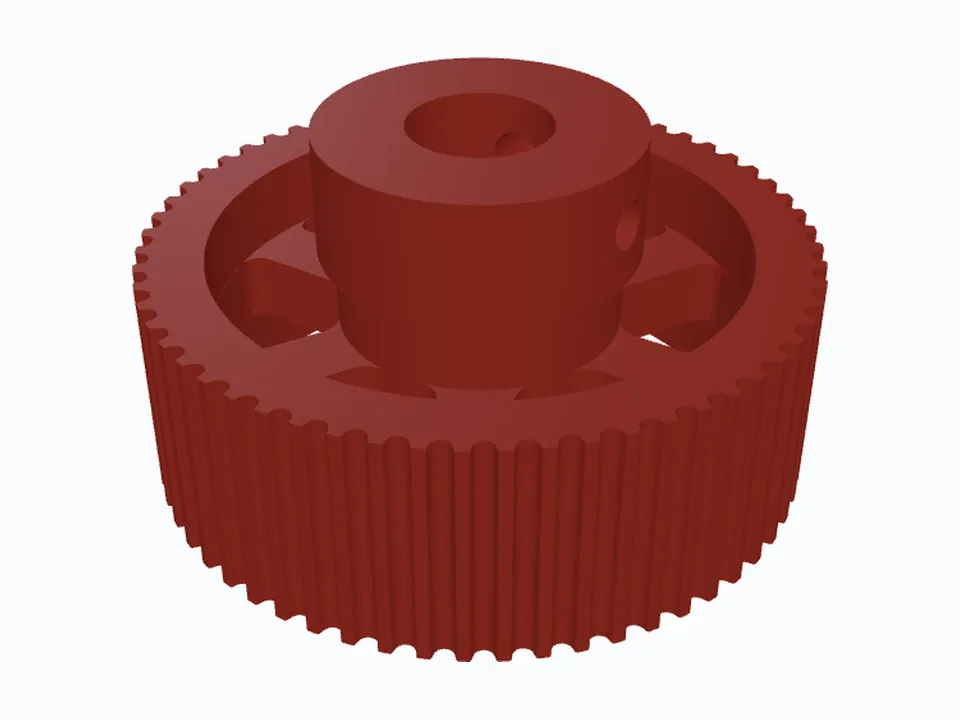
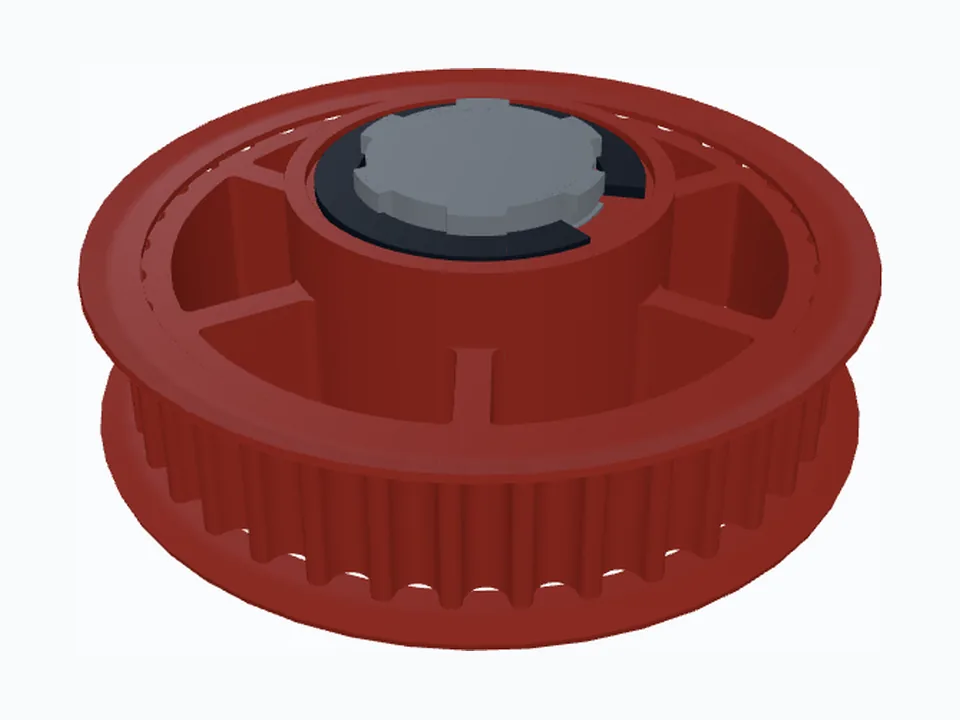
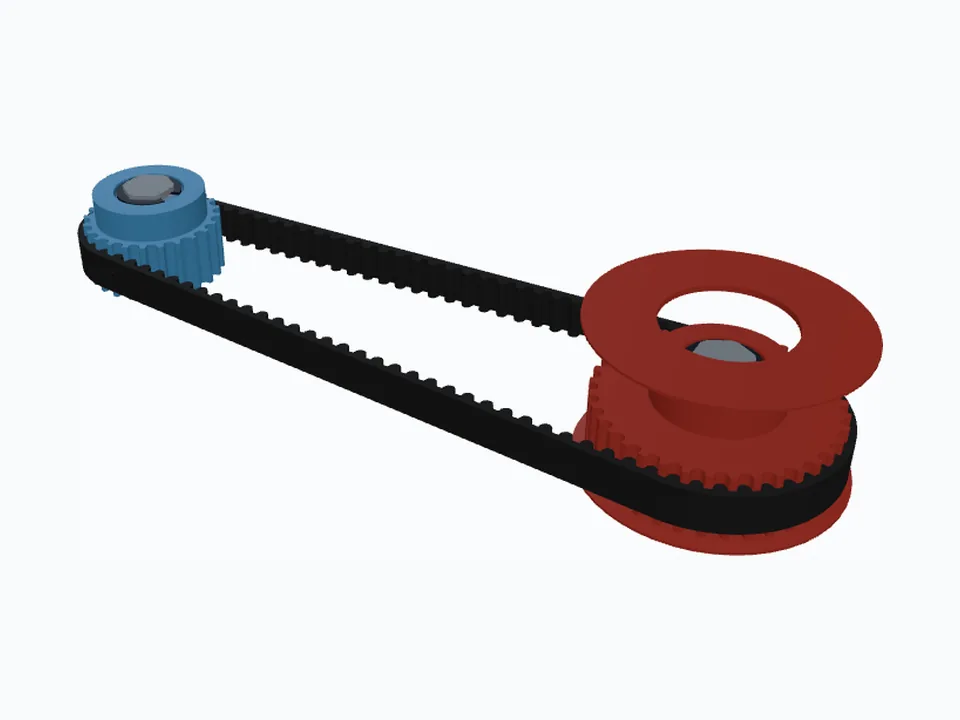
Big printed pulleys don't need to be solid: five and six spokes on a thin centre web cut plastic and print time, while the toothed rim stays full width for the belt.
Tuned for positioning rather than power: tight tooth clearance, no backlash allowance and 0.1 mm of print compensation, so the printed teeth hold the belt without slop.
Splined like a gearbox shaft: ISO 4156 involute splines in module 1, with a flat root at 30° on the small pulley and a fillet root at 37.5° on the large one.
Heavy-duty HTD 8M on splined shafts: straight-sided ISO 14 splines carry torque no set screw could, and the 36-tooth pulley is spoked around its spline hub.
One print, no glue: both flanges print in place, the top one on breakaway supports sized for a 0.4 mm nozzle, so each pulley comes off the bed finished.
Designing is free and needs no account: the 3D view, Dimensions panel and warnings all work without signing in. Downloading a file costs a few tokens, and every new account starts with 20 free ones.
STEP (true nominal size, for CAD), STL (with your print compensation, for 3D printing), and DXF and SVG (true lines and arcs, for laser cutting, waterjet and CAD sketches) — for each pulley and for the belt.
The tooth clearance and backlash presets and the print compensation setting are there for exactly that. Start with the standard presets, print one, and adjust the compensation for your printer.
Yes. Pick Hex bar under Bore shape: ½″ hex, rounded hex and metric sizes, with retaining-ring grooves if you want them. See the FRC HTD 5M sample.
Download STEP and import it — every CAD package reads it. Add-ins that import straight into your design are on the way; see CAD integrations.
Yes. The mm / in switch changes every entry and readout; imperial belts and bores are built in.