
4 : 1
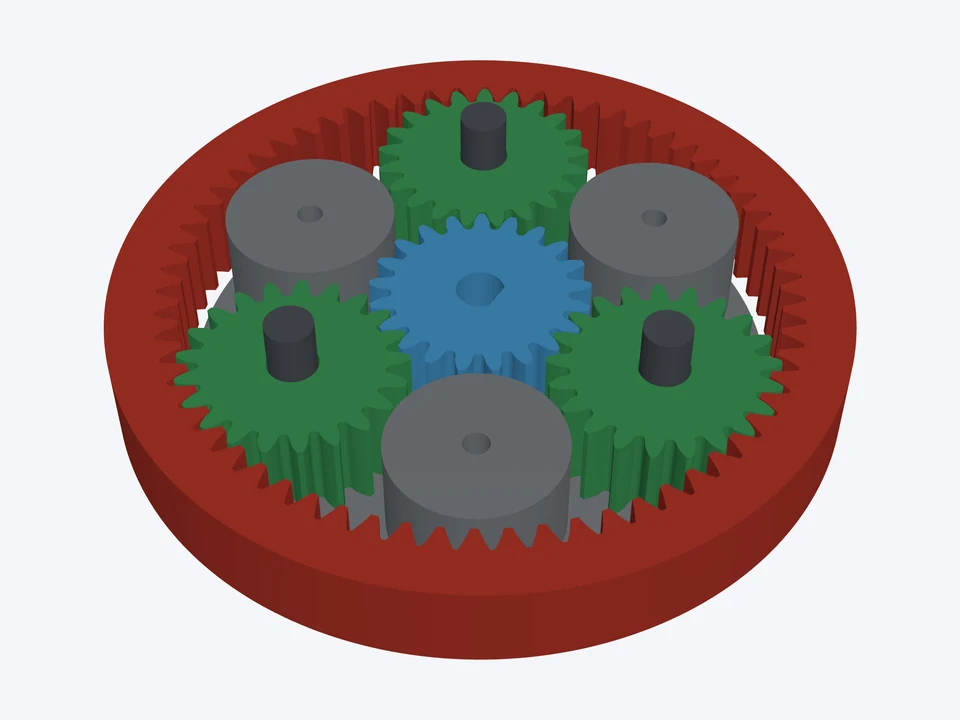

4 : 1 · NEMA 17 gearbox
Module 1 · 20° · spur
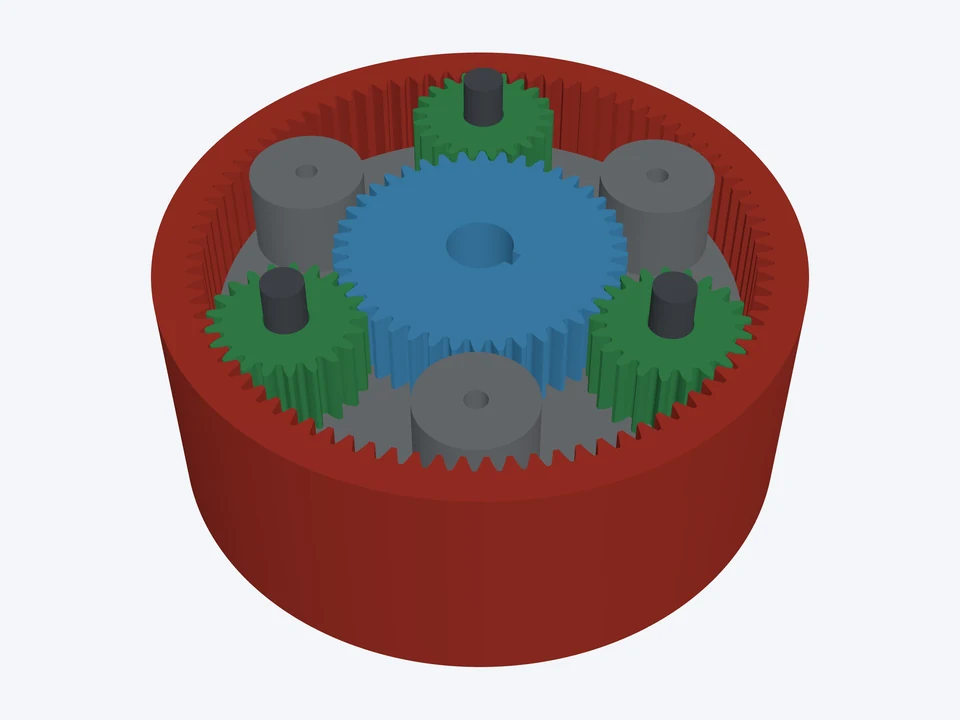
A one-stage 4 : 1 reducer for a NEMA 17 stepper: 5 mm D-flat sun, three planets, 8 mm output.
Set the teeth of the sun, planets and ring, or ask for a ratio and pick from the sets that fit. The app checks that the planets go in and clear each other, places them so every one meshes, and designs the carrier with its pins and bearings. Hold any member, stack up to three stages, and download every part as STL or STEP.
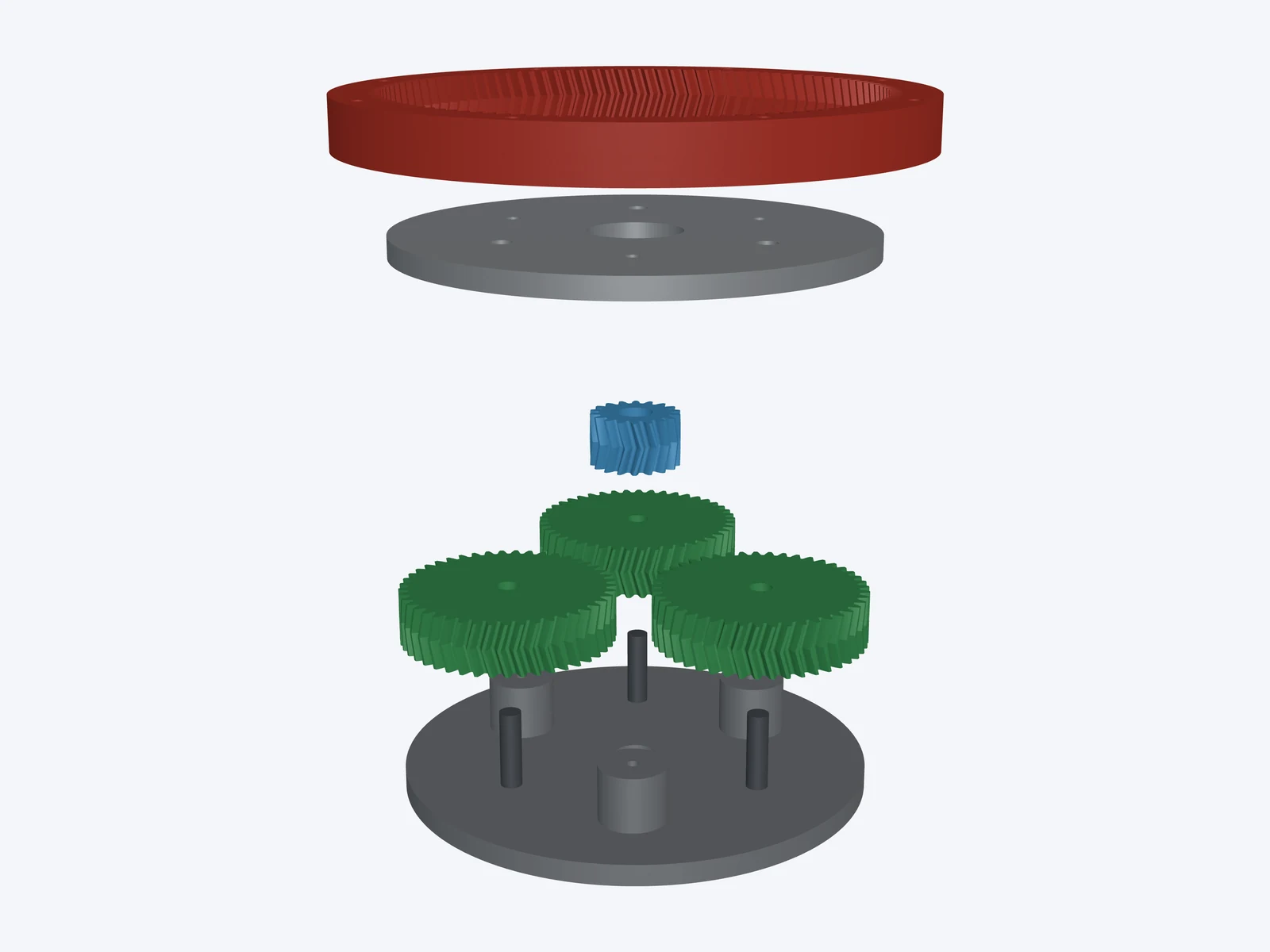
The whole set in one design: 1 to 8 planets, spaced evenly, or at whole tick angles when the teeth won't divide, each placed so it meshes.
Give a target ratio and the number of planets, and the app lists the sets of teeth that assemble, the nearest first.
Ring held, sun held or carrier held, or none for a differential, with every member's speed, torque and direction. Up to three identical stages, each carrier printed with the next sun.
Gear Designer's teeth: ISO 54 modules or diametral pitch, the pressure angle, profile shift on every gear and DIN 3967 backlash.
Assembly, neighbour clearance, one centre distance for both meshes, tip and trochoid interference, contact ratio and rim thickness, with one-click Auto-fix.
A straddle or cantilevered carrier; dowel pins checked for bending, shear and bearing; NTN ball bearings in the planets with their life and speed; ring bolt holes.
Spur sets rated to AGMA 2001 as AGMA 6123 applies it: the input torque the set can carry and which part goes first. The ring's bending and printed materials are estimates.
Round, D-flat, keyway, ISO 14 and ISO 4156 spline and hex bores with retaining rings, on the sun and the carrier's output; hubs with set screws or hub pins.
STL of every part with print compensation, STEP of every part and of the assembled set, DXF and SVG of the carrier discs, and a list of the bought parts.
| Setting | Choices | Source |
|---|---|---|
| The set | Sun, 1 – 8 planets, ring, carrier; ring, sun or carrier held, or a differential | AGMA 6123-C16 |
| Stages | 1 – 3 identical stages, each carrier driving the next sun | |
| Teeth | Spur, helical, herringbone; ISO 54 modules or diametral pitch; profile shift | ISO 54; DIN 3960 |
| Backlash | Tooth thinning on every gear | DIN 3967 |
| Assembly checks | Even or unequal spacing, neighbour clearance, tip and trochoid interference | AGMA 6123; Dengel |
| Carrier | Straddle or cantilevered; dowel pins; NTN deep-groove ball bearings | AGMA 6123; NTN |
| Strength | Spur sets: the input torque the set carries; the ring's bending and printed materials estimated | AGMA 2001; AGMA 6123 |
| Files | STL and STEP of every part, STEP of the assembly, DXF and SVG of the carrier discs |
Stepper gearboxes, robot joints, FRC hex-shaft sets, desk toys and industrial reducers, one to three stages. Each opens with the sun, planets, ring and carrier assembled, ready to change.
Module 1 · 20° · spur
A one-stage 4 : 1 reducer for a NEMA 17 stepper: 5 mm D-flat sun, three planets, 8 mm output.
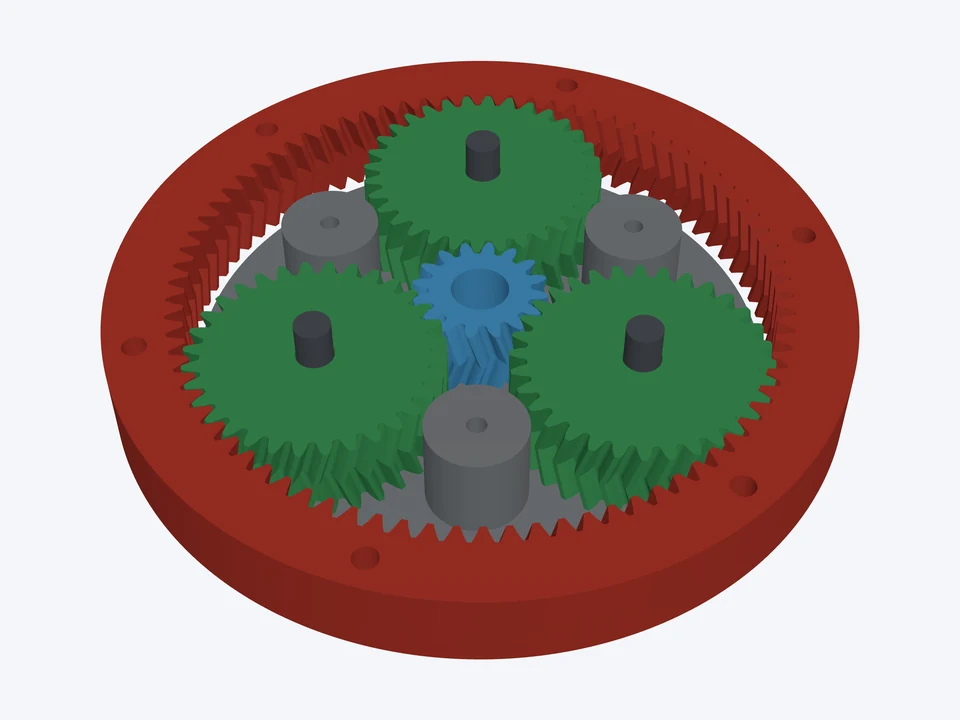

Module 1 · 20° · herringbone
The low-ratio stage legged robots put behind a brushless motor; flanged ring, six M3 bolts.
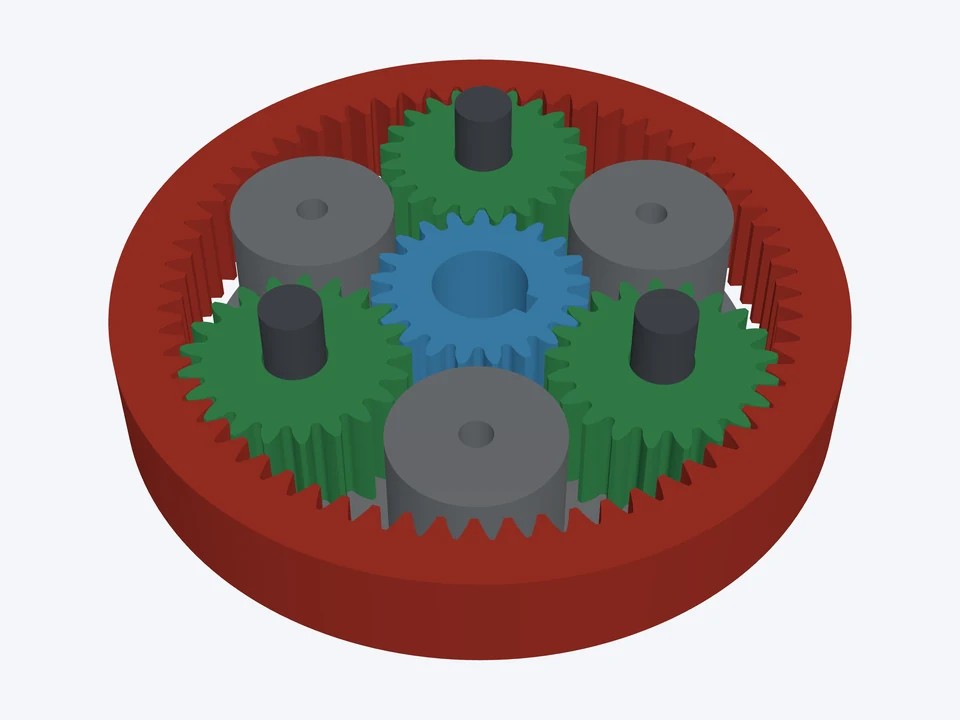

32 DP · 20° · spur
An FRC-style stage: 8 mm keyed motor shaft in, ½" hex out.
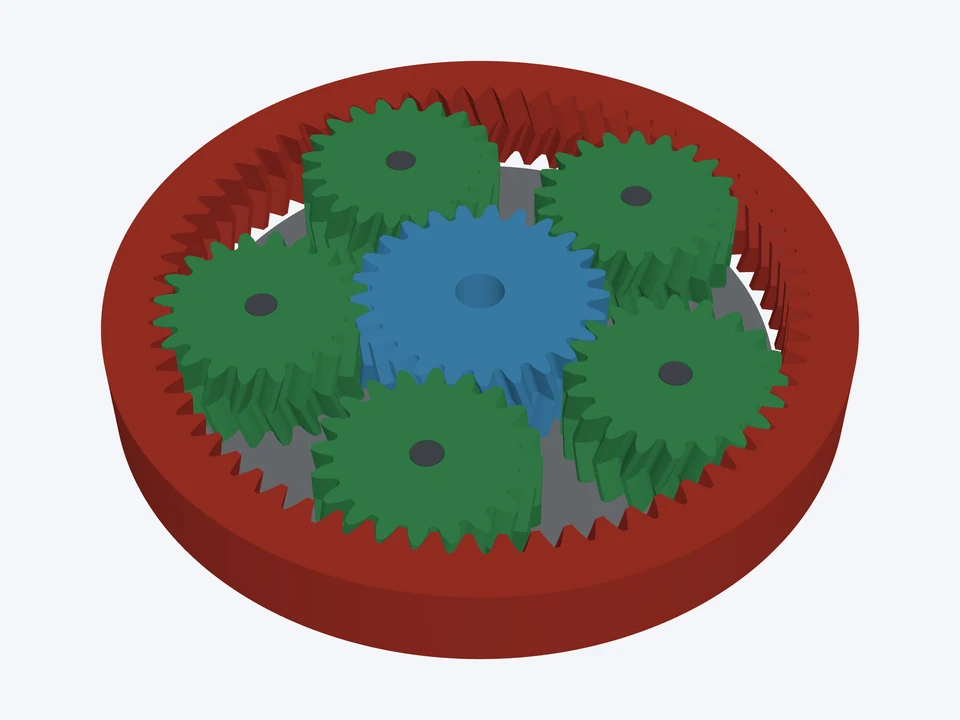

Module 1.5 · 20° · herringbone
The classic printed gear bearing: herringbone teeth hold it together round five planets.
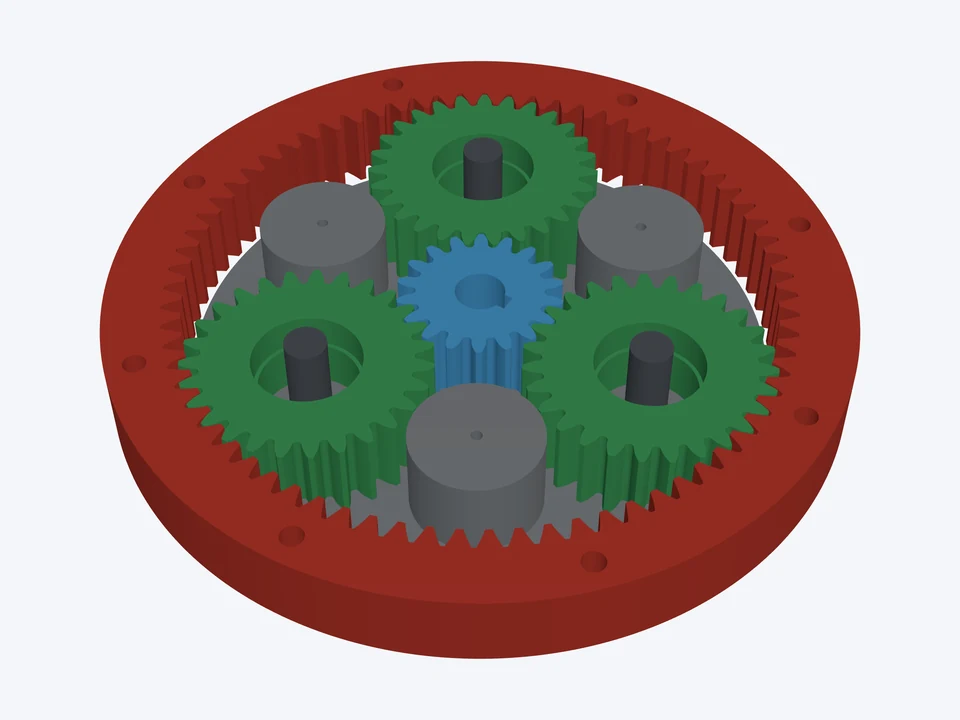

Module 2 · 20° · spur
A metal-ready 5 : 1: keyed shafts, planets on 6000 bearings, a flanged ring with eight M5 bolts.
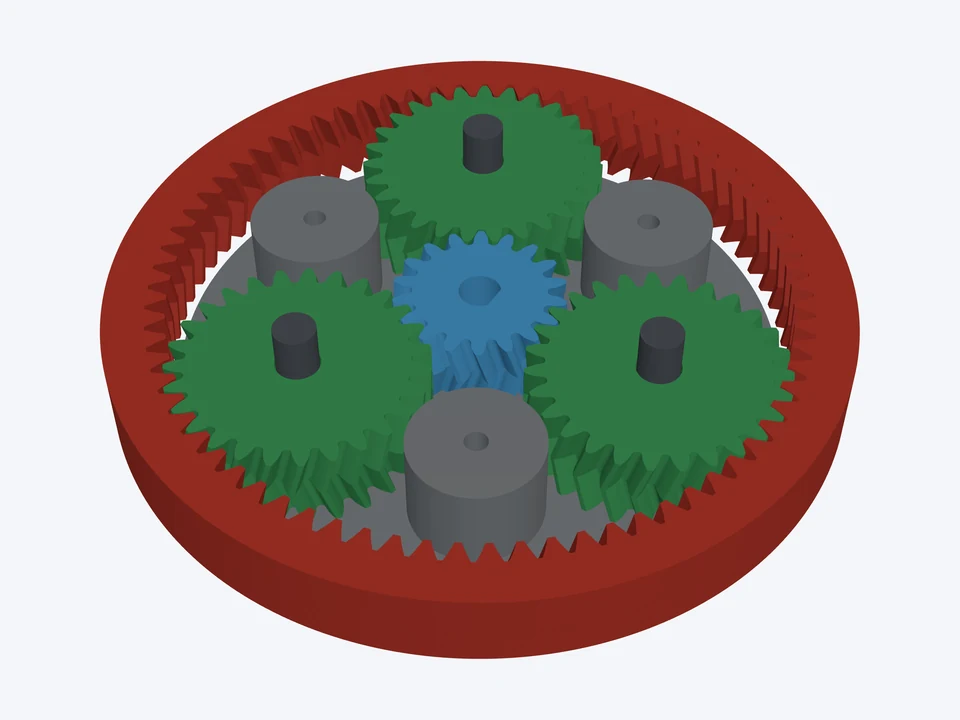

Module 1 · 20° · herringbone
5 : 1 in one stage; herringbone teeth run quietly and keep the planets in line.
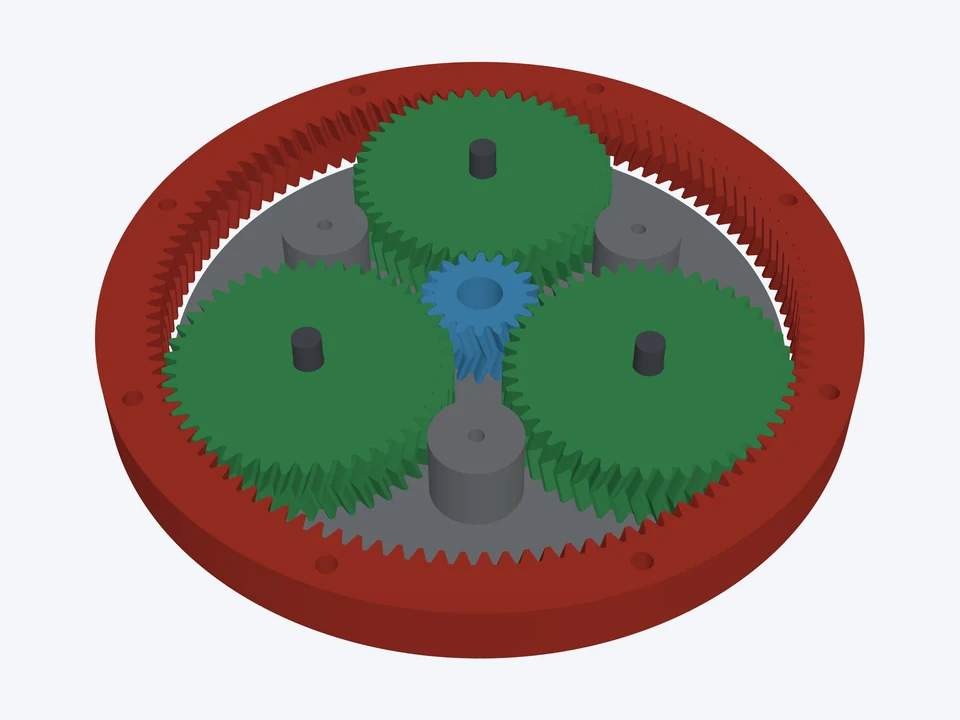

Module 1 · 20° · herringbone
7 : 1 in one stage: a small sun and big planets, still back-drivable.

32 DP · 20° · spur
Two 3 : 1 stages, 32 DP, ending in a ½" hex output.
STL of every part, with your print compensation (print the planet as many times as the set has planets), STEP at true size of every part and of the assembled set, and DXF and SVG of the carrier discs. The zip's README lists the bought parts: bearings, pins and bolts.
Give the ratio, a tolerance and the number of planets, and the app lists the sets of teeth that assemble, the nearest first. With the ring held and the sun driving, one stage gives 1 + ring teeth ÷ sun teeth; stack two or three stages to multiply it.
The app checks the three rules every planetary set must meet: the sun, planets and ring share one centre distance, the planets clear each other, and the teeth let the planets go in evenly spaced. When a set breaks one, it offers the nearest set that doesn't, or unequal spacing at whole tick angles.
The Strength check rates spur sets to AGMA 2001 as AGMA 6123 applies it to a planetary set, every stage included: the input torque the set can carry, and whether the teeth, the planet pins or the bearings go first. The ring's teeth in bending and the printed materials are estimates, marked ≈. Helical and herringbone sets aren't rated yet.
Yes. The print compensation goes into the STL only, and the STEP stays at true size. The planets turn on their pins or on NTN ball bearings pressed into printed pockets, and a stacked set prints each carrier together with the next stage's sun.
Yes. Designing and checking are free, and so are the bill of materials and the strength report. Downloads cost a few tokens, the same as the other tools, and one purchase covers every file of that design for 24 hours. See Pricing.