
—
Every SVG, DXF, STL and STEP file exported from this tool contains its design's settings — both sprockets and the drive. Selecting one here reads them and puts the page back as it was when the file was downloaded.
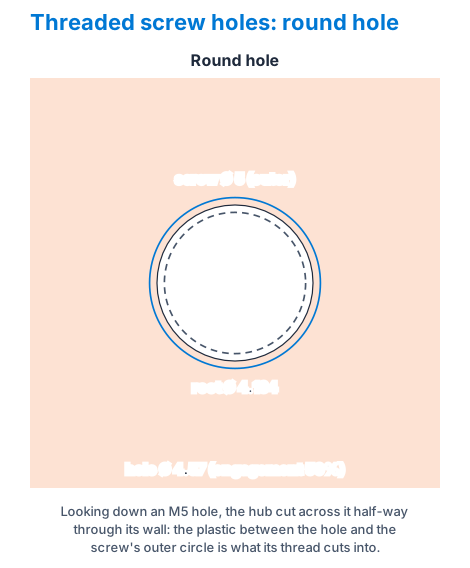
How tight a hole a set screw cuts its own thread into: it depends on your printer and filament, not on the sprocket. It applies to every set screw held by Tapping the plastic, on both sprockets, and is saved with each design; new designs start from your default. Captured nuts pass through a plain clearance hole and heat-set inserts use the hole you enter, so these settings don't change them.
The most torque the hub pins carry from the tooth layers to the hub. Three things can give: the pins shear where they cross into the hub, or they crush the holes in the sprocket or in the hub. The lowest of the three, over the safety factor, is the maximum operating torque.
Material values are typical (estimates), for parts printed flat as this app makes them; bearing is taken as the printed walls' tensile strength. Printed plastic creeps under a steady load, so keep the safety factor up for a constant torque. The bore's key, flat or set screw, from hub to shaft, is not rated here.